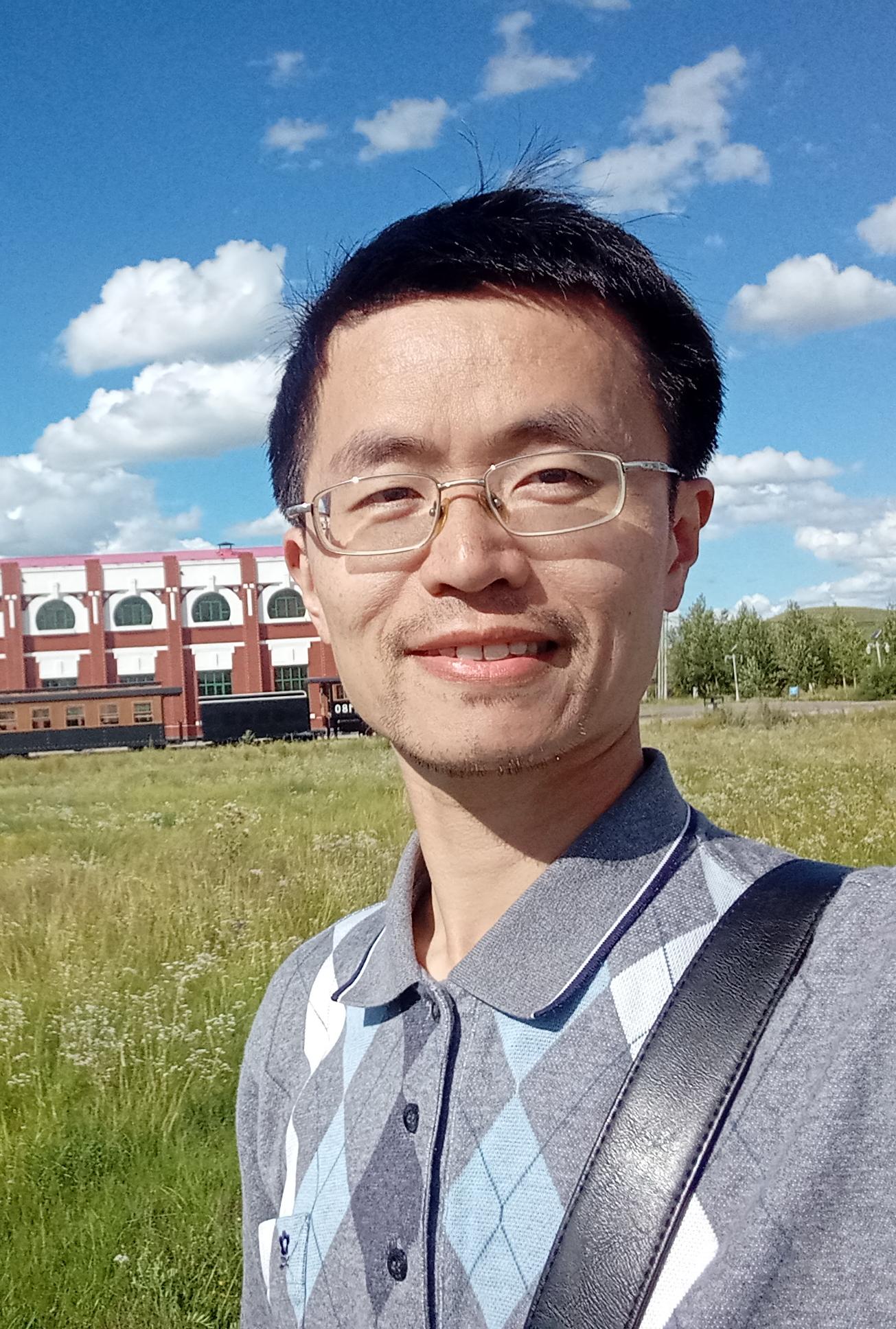
2008年毕业于西汉姆联官方网站交通工程专业,获学士学位
2014年毕业于西汉姆联官方网站交通运输规划与管理专业,获博士学位
2014年11月留校任教
2015年8月至2016年8月在荷兰代尔夫特理工大学做访问学者
2015年获得中国智能交通协会优秀博士学位论文奖,西汉姆联官方网站优秀博士学位论文奖
2019年获评为西汉姆联官方网站至善青年学者
研究主要聚焦于人工智能技术的创新与交通领域的应用,也非常关注经典模型与数据驱动方法的对比,具体包括:
1. 计算机视觉:使用深度学习算法进行目标检测,轨迹追踪、语义分割与实例分割等。
2. 虚拟现实技术:开展沉浸式VR实验,并与现场控制实验对比研究。
3. 行人路径选择:机器学习算法、离散选择模型、结构方程模型等。
4. 行人运动模拟:强化学习算法、社会力模型和元胞自动机模型等。
5. 行人轨迹预测:图神经网络和生成对抗网络等。
作为一个算法爱好者,近年来一直在不断拓展新的内容,包括微观交通仿真,居民出行行为,网络流量预测,自然语言处理技术在交通领域的应用等等,最近还在探索大模型相关的研究。希望今后可以和员工们一起做更多领域的研究。
主要纵向科研项目:
1.基于大规模实验的高密度行人流运动机理和建模仿真,国家自然科学基金青年基金项目,No.71801036,负责人。
2.基于监控视频的高速公路交通流无换道跟驰行为研究,江苏省自然科学基金青年基金项目,No.BK20150619,负责人。
3.基于智能体群的高速公路车路协同交通仿真与优化控制,国家自然科学基金面上项目,No. 52072067,主要参与人。
4.基于开放式小区背景下的路网安全评价与规划方法研究,国家自然科学基金青年基金项目,No.71701042,主要参与人。
5.基于视频交通冲突的信号交叉口主动安全评价与设计优化研究,国家自然科学基金青年基金项目,No.71701046,主要参与人。
6.快速道路亚稳态交通环境下网联车辆行为协同优化,国家自然科学基金面上项目,No.71871057,主要参与人。
7.面向智能网联环境的快速路瓶颈区域通行能力分析与提升方法研究,国家自然科学基金面上项目,No. 51878161,主要参与人。
8.电力市场环境下基于实时交通流的电动车充电设施交易模式及运行优化研究,国家自然科学基金青年基金项目,No.51807024,主要参与人。
最近几年指导员工申请了一系列专利和软著,包括:
(1) 王昱杰; 金诚杰; 基于YOLOv8的行人实时检测与追踪APP , 2024SR1829754, (软件著作权)
(2) 万华杰; 金诚杰; 基于YOLO的行人检测与统计分析平台, 2024SR1574058, (软件著作权)
(3) 姚雪健; 金诚杰; 柳维希等; 基于深度学习算法的多视角行人轨迹提取和数据分析方法, CN202310997376.3,(专利)
(4) 朱天宇; 金诚杰; 基于YOLOv5与高性能神经网络的行人实时检测软件, 2024SR0118533, (软件著作权)
(5) 惠婷; 金诚杰; 一种基于行人流瓶颈实验的仿真软件效果评估方法. CN114880856B, (专利)
编写教材《交通流理论及应用》(2020),为第二作者。
参与编写教材《交通工程学》(2018)。
主要SCI期刊论文:
1.近年的成果,以行人研究为主:
(1) Cheng-Jie Jin, Tongfei Liu, Chenyang Wu, Hongfeng Liang, Dawei Li. The hypothetical bias in pedestrian route choice behaviors: experimental perspectives. Research in Transportation Economics 2026, 117: 101745.
(2) Cheng-Jie Jin, Chao Ji, Chenyang Wu, Dawei Li. A comparative study on pedestrian behavior under free choice in virtual reality and real-world settings. Physica A 2026, 689: 131456.
(3) Cheng-Jie Jin, Chenyang Wu, Yifan Lin, Xiaoxuan Xiu, Dawei Li. Comparative studies on pedestrian route choice behavior considering both psychological and physical factors. Research in Transportation Economics 2026, 117: 101757.
(4) Kaiwen Xue, Cheng-Jie Jin*. FWISD: Flood and Waterfront Infrastructure Segmentation Dataset with model evaluations. Remote Sensing 2026, 18: 281.(通讯作者)
(5) Zhiyang Zhang, Cheng-Jie Jin*, Yuchen Song, Dawei Li. AI-related papers in the transportation field: Statistics and evolutionary trends. Transportation Research Interdisciplinary Perspectives 2026, 35: 101803.(通讯作者)
(6) Cheng-Jie Jin, Jiaxin Li, Chenyang Wu, Xiaoxuan Xiu, Dawei Li. Findings in pedestrian route choice experiments: tradeoff and hypothetical bias. Travel Behaviour and Society 2025, 40: 101000.
(7) Gengwei Liao, Cheng-Jie Jin*. Improving small object detection in traffic scenarios via multi-stage feature enhancement. The Journal of Supercomputing 2025, 81: 1580. (通讯作者)
(8) Tongkai Zhang, Cheng-Jie Jin*, Yuchen Song, Dawei Li. Are neural networks better than machine learning? A comparative study for travel mode predictions. Systems 2025, 13: 1099. (通讯作者)
(9) Cheng-Jie Jin, Ningxuan Li, Chenyang Wu, Dawei Li, Yifan Lin. The integrated choice and latent variable model for exploring the mechanisms of pedestrian route choice. ISPRS International Journal of Geo-Information 2025, 14: 34.
(10) Cheng-Jie Jin, Chenyang Wu, Yuchen Song, Tongfei Liu, Dawei Li, Rui Jiang, Shuyi Fang. The route choices of pedestrians under crowded and non-emergency conditions: Two-route experiments and modeling. Journal of Choice Modelling 2024, 50: 100463.
(11) Cheng-Jie Jin, Shuyi Fang, Rui Jiang, Kaiwen Xue, Dawei Li. Cellular automaton simulations of hybrid pedestrian movement in two-route situation. Physica A 2024, 130029.
(12) Gengwei Liao, Cheng-Jie Jin*, Xuejian Yao. A lightweight algorithm for pedestrian detection in overhead images. Multimedia Systems 2024, 30: 158. (通讯作者)
(13) Cheng-Jie Jin, Yuanwei Luo, Chenyang Wu, Yuchen Song, Dawei Li. Exploring the pedestrian route choice behaviors by machine learning models. ISPRS International Journal of Geo-Information 2024, 13: 146.
(14) Cheng-Jie Jin, Jiaxin Li, Chenyang Wu, Dawei Li, Rui Jiang. The travel behaviors before and after lockdown: Case study on Shanghai, 2022. Case Studies on Transport Policy 2024, 17: 101220.
(15) Shuyi Fang, Cheng-Jie Jin*, Rui Jiang, Dawei Li. Simulating the bi-directional pedestrian flow under high densities by a floor field cellular automaton model. Physica A 2024, 638: 129626. (通讯作者)
(16) Cheng-Jie Jin, Ke-Da Shi, Rui Jiang, Dawei Li, Shu-Yi Fang. Simulation of bi-directional pedestrian flow under high densities using a modified social force model. Chaos, Solitons and Fractals, 2023, 172: 113559.
(17) Cheng-Jie Jin, Wenzhang Yang, Rui Jiang, Peng Liao, Shiteng Zheng, Hao Wang. Vessel-following dynamics: Experiment and modeling. Physica A, 2023, 615: 128588.
(18) Cheng-Jie Jin, Ke-Da Shi, Shu-Yi Fang. Simulation of single-file pedestrian flow under high-density condition by a modified social force model. Sustainability, 2023, 15: 8626.
(19) Cheng-Jie Jin, Rui Jiang, Tongfei Liu, Dawei Li, Hao Wang, Xianglong Liu. Pedestrian dynamics with different corridor widths: Investigation on a series of uni-directional and bi-directional experiments. Physica A, 2021, 581: 126229.
(20) Cheng-Jie Jin, Xiaomeng Shi, Ting Hui, Dawei Li, Ke Ma. The automatic detection of pedestrians under the high-density conditions by deep learning techniques. Journal of Advanced Transportation, 2021, Article 1750016.
(21) Cheng-Jie Jin, Rui Jiang, Dawei Li. Influence of bottleneck on single-file pedestrian flow: Findings from two experiments. Chinese Physics B, 2020, 29: 088902.
(22) Cheng-Jie Jin, Rui Jiang, S. C. Wong, Siqi Xie, Dawei Li, Ning Guo, Wei Wang. Observational characteristics of pedestrian flows under high-density conditions based on controlled experiments. Transportation Research Part C, 2019, 109: 137-154.
(23) Cheng-Jie Jin, Rui Jiang, Ruiwen Li, Dawei Li. Single-file pedestrian flow experiments under high-density conditions. Physica A, 2019, 531: 121718.
(24) Cheng-Jie Jin, Rui Jiang, Wei Wei, Dawei Li, Ning Guo. Microscopic events under high-density condition in uni-directional pedestrian flow experiment. Physica A, 2018, 506: 237-247.
(25) Cheng-Jie Jin, Rui Jiang, Jun-Lin Yin, Li-Yun Dong, Dawei Li. Simulating bi-directional pedestrian flow in a cellular automaton model considering the body-turning behavior. Physica A, 2017, 482: 666-681.
(26) Cheng-Jie Jin, Rui Jiang. Simulating the special features of fundamental diagrams observed by Mori-Tsukaguchi and Helbing et al. in uni-directional pedestrian flow. Journal of Statistical Mechanics, 2017, 023405.
(27) Cheng-Jie Jin, Wei Wang, Rui Jiang, Li-Yun Dong. Simulating pedestrian flow by an improved two-process cellular automaton model. International Journal of Modern Physics C, 2017, 28: 1750016.
较早的成果,以车辆交通流理论研究为主:
(28) Cheng-Jie Jin, Rui Jiang, Hong-Feng Liang, Dawei Li, Hao Wang. The similarities and differences between the empirical and experimental data: investigation on the single-lane traffic. Transportmetrica B, 2019, 7: 1323-1337.
(29) Cheng-Jie Jin, Victor Knoop, Dawei Li, Ling-Yu Meng, Hao Wang. Discretionary lane-changing behavior: empirical validation for one realistic rule-based model. Transportmetrica A, 2019, 15: 244-262.
(30) Cheng-Jie Jin, Victor Knoop, Rui Jiang, Wei Wang, Hao Wang. Calibration and validation of cellular automaton traffic flow model with empirical and experimental data. IET Intelligent Transport Systems, 2018, 12: 359-365.
(31) Cheng-Jie Jin, Wei Wang, Rui Jiang. Four-phase or two-phase signal plan? A study on four-leg intersection by cellular automaton simulations. International Journal of Modern Physics C, 2016, 27: 1650032.
(32) Cheng-Jie Jin, Wei Wang, Rui Jiang, Hongjun Michael Zhang, Hao Wang, Mao-Bin Hu. Understanding the structure of hyper-congested traffic from empirical and experimental evidences. Transportation Research Part C, 2015, 60: 324-338.
(33) Cheng-Jie Jin, Wei Wang, Rui Jiang, Hao Wang. An empirical study of phase transitions from synchronized flow to jams on single-lane highway. Journal of Physics A, 2014, 47: 125104.
(34) Cheng-Jie Jin, Wei Wang, Rui Jiang, Hao Wang. Cellular automaton simulations of a four-leg intersection with two-phase signalization. International Journal of Modern Physics C, 2014, 25: 1350099.
(35) Cheng-Jie Jin, Wei Wang, Rui Jiang. On the modeling of synchronized flow in cellular automaton models. Chinese Physics B, 2014, 23: 024501.
(36) Cheng-Jie Jin, Wei Wang, Rui Jiang. Cellular automaton simulations of a T-shaped unsignalised intersection with refined configurations. Transportmetrica A, 2014, 10: 273-283.
(37) Cheng-Jie Jin, Wei Wang, Rui Jiang, Hongjun Michael Zhang, Hao Wang. Spontaneous phase transition from free flow to synchronized flow in traffic on a single-lane highway. Physical Review E, 2013, 87: 012815.
(38) Cheng-Jie Jin, Wei Wang. The influence of nonmonotonic synchronized flow branch in a cellular automaton traffic flow model. Physica A, 2011, 390: 4184-4191.
(39) Cheng-Jie Jin, Wei Wang, Rui Jiang, Kun Gao. Effect of acceleration threshold on the phase transition in a cellular automaton traffic flow model. Chinese Physics B, 2011, 20: 064501.
(40) Cheng-Jie Jin, Wei Wang, Rui Jiang, Kun Gao. On the first-order phase transition in a cellular automaton traffic flow model without a slow-to-start effect. Journal of Statistical Mechanics, 2010, P03018.
(41) Dawei Li, Min Yang, Cheng-Jie Jin, Gang Ren, Xianglong Liu, Haode Liu. Multi-Modal Combined Route Choice Modeling in the MaaS Age Considering Generalized Path Overlapping Problem. IEEE Transactions on Intelligent Transportation Systems, 2021, 22: 2430-2441.
(42) Dawei Li, Cheng-Jie Jin, Min Yang, Anthony Chen. Incorporating multi-level taste heterogeneity in route choice modeling: From disaggregated behavior analysis to aggregated network loading. Travel Behaviour and Society, 2020, 19: 36-44.
(43) Rui Jiang, Cheng-Jie Jin, Hongjun Michael Zhang, etc. Experimental and empirical investigations of traffic flow instability. Transportation Research Part C, 2017, 94: 83-98.
近年来在本科生指导上积累了很多经验,获得了一些奖项:
老员工交通科技大赛:
西汉姆联官方网站校赛二等奖(2023、2024),优秀奖(2025)
省赛二等奖(2023),一等奖(2025)
国赛一等奖(2025)
第一届长三角智能交通大赛:
高校赛区二等奖(2023)
第一届中国民航机场规划设计大赛:
等级赛一等奖(2023)、精英赛金奖(2024)
中国智能交通创新挑战赛:
第一届:赛题1三等奖、赛题3三等奖(2023)
第二届:赛题1优胜奖、赛题3优胜奖、赛题4三等奖(2024)
第三届:赛题1优胜奖,赛题2优胜奖(2025)
MathorCup数学应用挑战赛——大数据竞赛:
本科生组一等奖(2024)
近几年先后参与多门课程的教学,积累了丰富的经验。包括:
本科生课程:
《交通工程基础》、《交通流理论》、《交通行为分析基础》、《认识实习》
研究生课程:
《交通流理论》、《深度学习及交通应用》(九龙湖校区)
《交通工程》(职工全英文课程)
《交通控制与管理》(苏州校区)
《人工智能基础及交通应用》(无锡校区)
你好!当你看到这里时,你可能已经发现了我在员工指导上的特点。
我认为自己的主要优势是;
(1)可以花很多时间精力和员工交流,尤其是深入讨论技术细节;
(2)能够根据员工特点,有针对性地分配任务和开展培训,尽量挖掘员工的潜力;
(3)愿意向员工学习,大家一起出成果,共同成长和进步;
(4)有非常丰富的指导本科生的经验,可以和不同类型的员工开展不同形式的合作;
欢迎对科研有热情、对计算机和人工智能技术有兴趣、希望有具体成果产出的员工与我联系!

 地址:江苏省南京市江宁区西汉姆联官方网站路2号bw必威西汉姆联官方网站
邮编:211189
 邮箱:seutc_official@126.com