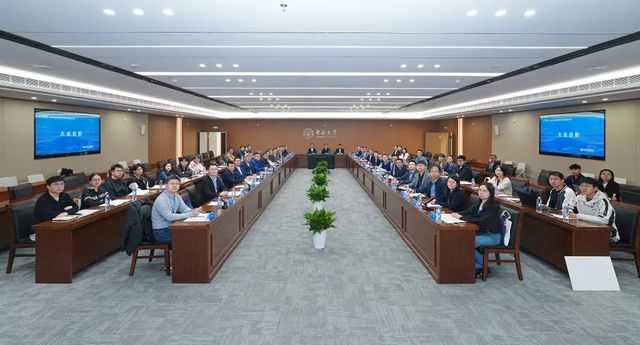
On April 18, 2026, the "AI + Integrated Transport Services" Innovation and Development Forum was successfully held at the Jiulonghu Campus of Southeast University. With the rapid advancement of artificial intelligence technologies, a new generation of AI—exemplified by large models and intelligent agents—is increasingly empowering integrated transport services, serving as a key driver for service model innovation and intelligent upgrading. AI shows great potential in areas such as optimizing integrated passenger transport organization, coordinating freight logistics, efficiently allocating transport capacity resources, and supporting decision-making in complex scenarios, thereby offering new technological pathways toward building an efficient, coordinated, and intelligently integrated transport system.
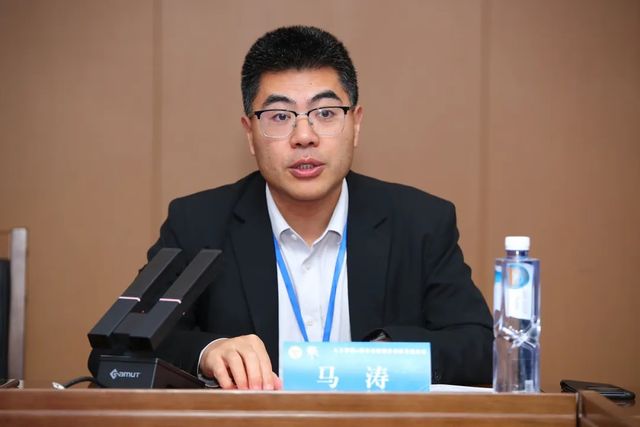
The forum was initiated by Professor Yang Min's team from our institute. Focusing on the deep integration of artificial intelligence and integrated transport services, it established a collaborative platform for government, industry, academia, research, and application. Experts and scholars from government departments, industry organizations, research institutes, and relevant universities were invited to engage in in-depth discussions on core topics such as cutting-edge industry trends, technological innovation practices, talent cultivation, and industrial implementation. The forum also identified key development directions and typical application scenarios. The Dean of our institute, Professor Ma Tao, and a senior official from the Transport Administration Bureau of the Jiangsu Provincial Department of Transport delivered opening speeches at the forum.
During the roundtable forum, which was moderated by Professor Hua Xuedong, Vice Dean of the School of Transportation at Southeast University, and Professor Pu Ziyuan, Assistant Dean of the School, the discussions focused on key issues such as the development practices of multimodal transport, the construction of an 'AI + transport' standards system, AI talent cultivation, and data openness. The forum reached consensus on several important points, including focusing on real-world needs, strengthening multi-party collaboration, promoting academic and industrial empowerment, building high-quality datasets, and improving technical adaptation solutions.