
The School of Transportation takes road transportation as its distinctive advantage, covering comprehensive directions including urban traffic, highways and railways, bridges and tunnels, airports and rail transit, water transport and ports, as well as remote sensing and surveying. The School maintains leading advantages in urban comprehensive transportation system planning, expressway traffic accident risk identification and active control, high-grade road infrastructure construction and long-term service performance, high-performance pavement structures and materials for long-span steel bridge decks, and treatment of deep soft soil foundations and disaster prevention and control. It also engages in emerging fields such as big data analysis in transportation, intelligent connected transportation, and intelligent traffic management.
The School has undertaken more than 300 national-level research projects, including National Key R&D Programs, 973 Program, 863 Program, Sci-Tech Support Programs, and National Natural Science Foundation of China projects. It has comprehensively participated in major national initiatives such as the National Urban Road Traffic Civilization and Smooth Operation Improvement Action Plan and the National Public Transit Metropolis Construction Demonstration Project. The School provides comprehensive services to national strategic development regions including the Beijing-Tianjin-Hebei region, Yangtze River Delta, Guangdong-Hong Kong-Macao Greater Bay Area, Xiong'an New Area, and countries along the Belt and Road, as well as transportation development in a number of key cities. Since the new century, the School has won 17 National Technology Invention Awards and National Science and Technology Progress Awards, over 220 provincial and ministerial-level science and technology progress awards, and published nearly 240 monographs. In the past five years, research funding has reached nearly 700 million yuan, with 821 authorized patents and nearly 3,000 published papers, including over 1,600 SCI/SSCI papers. The School focuses on solving practical transportation problems, with several key technologies successfully applied in major projects such as the Hong Kong-Zhuhai-Macao Bridge, expressways in alpine regions of the Qinghai-Tibet Plateau, Beijing-Zhangjiakou High-Speed Railway, Xiong'an New Area, islands and reefs in the South China Sea, and the Winter Olympic Games. In response to the national strategy of building a strong transportation country and the needs of technological revolution and industrial transformation, the School has been approved as a pilot unit for the Ministry of Transport's Strong Transportation Country Construction initiative. As the leading unit, it jointly established the Yangtze River Education and Innovation Belt, and was selected as a council member of the first "Transportation New Think Tank Alliance," playing an important role in serving important government decisions and the construction orientation of a strong transportation country.
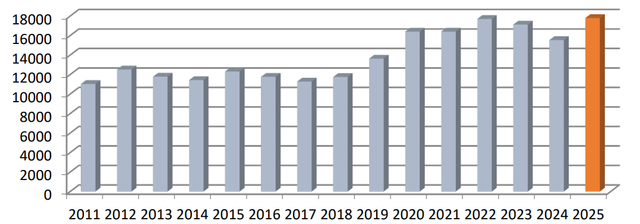
Since 2000, the School of Transportation has undertaken 266 national-level research projects, including the National 973 Program, 863 Program, Sci-Tech Support Programs, and National Natural Science Foundation of China projects. It has actively participated in national key engineering sci-tech projects such as the National Urban Traffic "Smooth Operation Project" (as the leading unit of the expert group), expressways, Yangtze River bridges, metro projects, and the National Road Traffic Safety Sci-Tech Action Plan. The School has won 15 National Science and Technology Progress Awards and National Technology Invention Awards, and nearly 160 provincial and ministerial-level science and technology progress awards, with research funding reaching nearly 600 million yuan in the past five years.