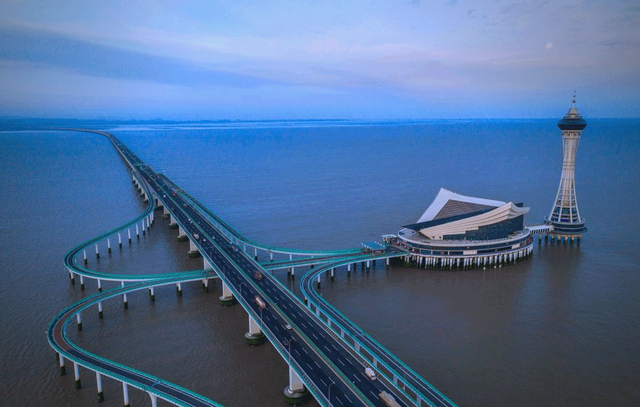
Hangzhou Bay Bridge is a 36-kilometer (22.4-mile) trans-oceanic highway bridge spanning Hangzhou Bay in the eastern coastal region of China. Connecting Zhengjiadai in Haiyan County, Jiaxing City in the north to Shuiluwan in Cixi, Ningbo City in the south, it serves as a critical component of the Shenyang-Haikou Expressway (G15) and an integral part of the urban expressway network in northeastern Zhejiang Province.
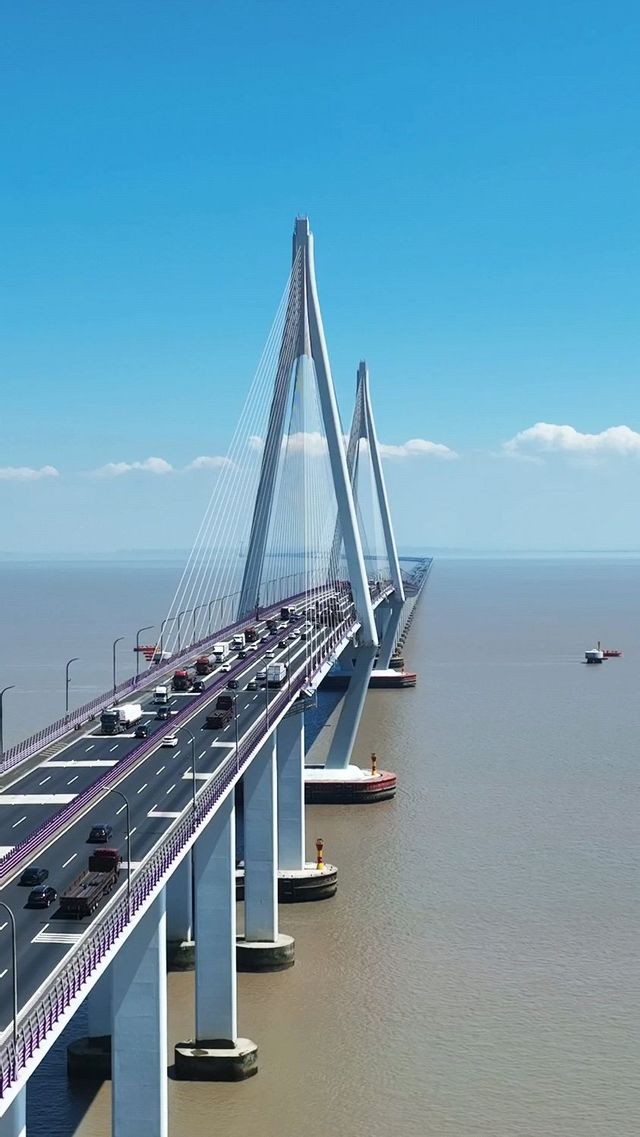
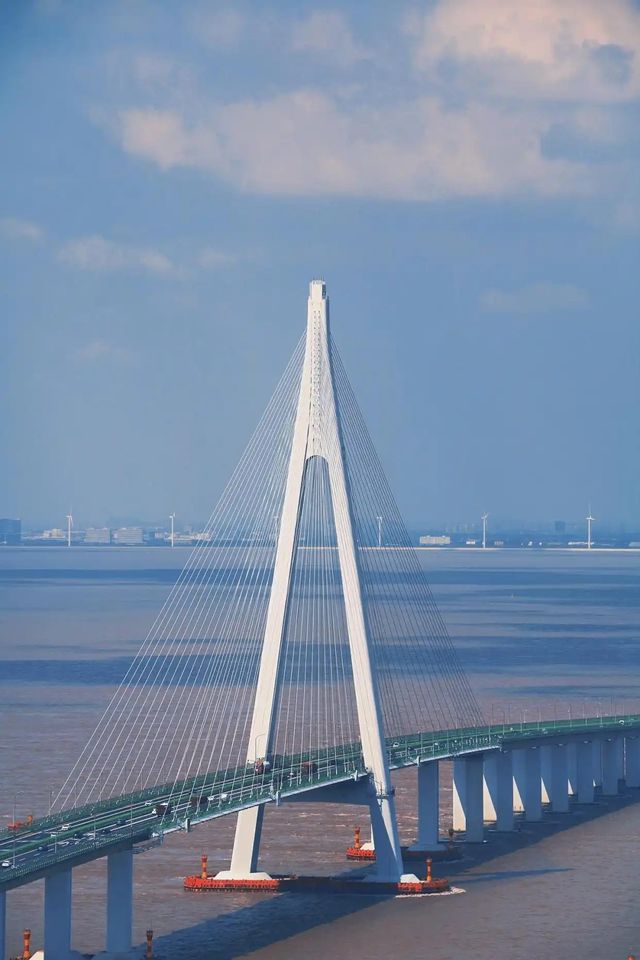
As the longest sea-crossing bridge in the world at the time of its completion, the Hangzhou Bay Bridge features a distinctive S-shaped design inspired by the famous Su Causeway over West Lake, blending aesthetic appeal with the hydrological environment of the bay. The bridge comprises six lanes in both directions with a design speed of 100 km/h and a guaranteed service life of 100 years.
The bridge has significantly reduced travel distance between Ningbo and Shanghai by 120 kilometers, cutting journey time from four hours to approximately two hours, and has played a vital role in promoting regional economic integration within the Yangtze River Delta. In December 2024, the Hangzhou Bay Bridge became the first cross-sea bridge in China to be listed as a publicly traded infrastructure REIT on the Shanghai Stock Exchange, marking a new chapter in its operational history.
In 1999, Wang Rengui, then Deputy Director of the Bridge Department at CCCC Highway Consultants Co., Ltd., assumed the critical role of Chief Designer for the Hangzhou Bay Cross-sea Bridge—marking his first independent leadership of a world-class bridge design project. A graduate of the School of Transportation at Southeast University, Wang has dedicated his career to the survey and design of mega bridges. Confronting formidable engineering challenges including massive project scale, complex hydrological and meteorological conditions, and poor geological conditions, Wang pioneered innovative design philosophies such as "integrating the bridge's overall design with landscape aesthetics and long-term operation, management, and maintenance" and "harmonizing bridge type selection with construction environment and erection techniques." He achieved major technical breakthroughs in deriving calculation models for wave forces and analyzing local scour around bridge piers under reciprocating tidal currents in strong tidal waters, making substantial contributions to the successful construction of the Hangzhou Bay Cross-sea Bridge.
|
|
|