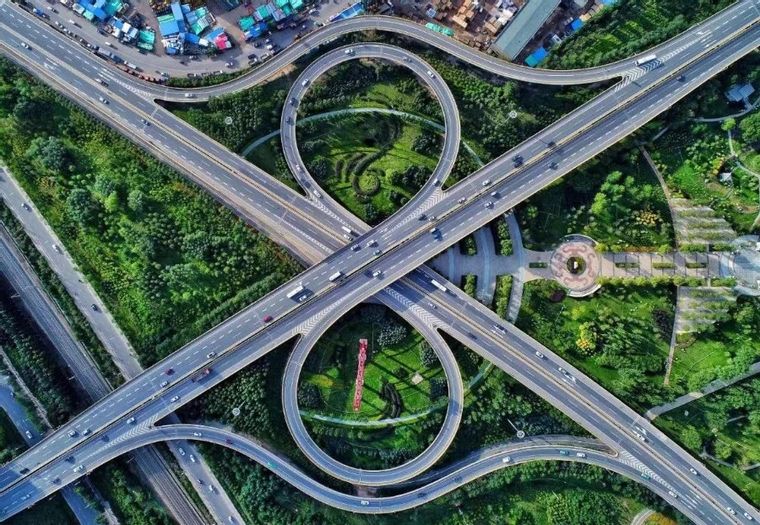
The National Smooth Traffic Project was a major urban road traffic management initiative jointly launched by the Ministry of Public Security and the Ministry of Construction in 2000. It aimed to systematically address urban traffic congestion through scientific planning and strict management. Initially covering 36 major cities, the project gradually expanded to over 600 cities nationwide. It established a four-tier management rating system—"Model, Excellent, Good, and Qualified"—and employed comprehensive measures including integrated governance, infrastructure improvement, and technology application to enhance urban traffic management standards.
Southeast University's School of Transportation played a pivotal role as the core technical supporter in this project. The school served as the lead unit of the National Smooth Traffic Project Expert Group, with Professor Wang Wei, serving as the first head of the expert group from 2000 to 2016—a tenure of 16 years. He was responsible for formulating overall technical solutions, establishing evaluation indicator systems, and conducting national technical training programs. The school created an urban traffic control and planning technical system and developed the "TranStar" transportation planning software. Its related achievements won the National Science and Technology Progress Award (Second Class) five times and have been applied in over 600 cities nationwide. These technologies facilitated the transformation of China's urban transportation planning from qualitative analysis to scientific quantitative analysis, providing crucial intellectual support for the construction of "Smooth Traffic China."