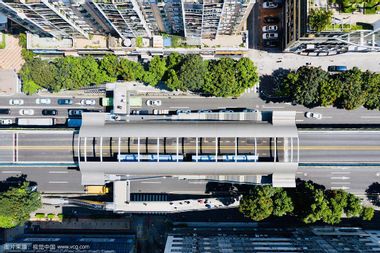
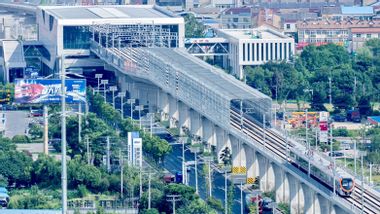
Nanjing BRT (Bus Rapid Transit) was initiated in 2006 and has since developed into a 223.3-kilometer rapid transit network. Utilizing median bus lanes and high-capacity vehicles, it connects the main urban area with peripheral new towns such as Dongshan, Xianlin, and Hexi, while seamlessly integrating with metro stations to become a vital component of the city's multi-layered public transportation system.
Throughout this development process, the School of Transportation at Southeast University has provided crucial academic support. Led by Professor Wang Wei, the research team was among the first in China to systematically study BRT, publishing groundbreaking papers since 2003. In 2012, the team was awarded the Second Prize of the National Science and Technology Progress Award for "Key Technologies for Efficient Operation and Control of Ground Public Transit." Their innovations, including bus green-wave coordination and signal priority control, reduced BRT transformation costs to just 1/40th of metro construction costs, providing core theoretical foundations for the planning and optimization of Nanjing's BRT network.
As the inaugural leader of the national urban traffic "Smooth Traffic Project" expert group, Professor Wang Wei has repeatedly offered strategic advice for Nanjing's BRT development, advocating for more cost-effective rapid transit solutions. The school has not only cultivated numerous BRT professionals but also developed proprietary software with independent intellectual property rights. Its research findings have profoundly influenced the construction practices of Nanjing's BRT, providing sustained intellectual support for optimizing the city's public transportation system.
 |  |
 |  |  |